

In our latest 20 Minute Marketing Webinar, Answer Engine Optimization: The Next Evolution of Consumer Search, Venus Lanzot, BrightFire’s Manager of Marketing, explored how the increased consumer use of AI platforms like ChatGPT and Gemini is changing how we approach digital marketing. To be easily discovered and cited by AI systems, local insurance agencies must build on the foundation of local search engine optimization by incorporating Answer Engine Optimization (AEO).
Replay the webinar, or read through the full transcript for details about the impact that AI and conversational search will have on independent insurance agents. Get actionable tips on what local insurance agencies should do to remain relevant. See how BrightFire’s Insurance Agency Website service follows the latest AI/search optimization standards to help your agency get found by customers in the age of AI.
Watch the Webinar
Additional Questions?
If you have any questions about what we discussed in the webinar or BrightFire’s Insurance Agency Website service, please schedule a personalized consultation with a BrightFire Sales Advisor.
Webinar Transcript
Read the full transcript, or use the links to jump to a section, and see what’s possible for your agency.
- The Digital Marketing Shift: Building on Foundational SEO to Advanced AEO
- Introducing Answer Engine Optimization (AEO)
- AEO vs Traditional SEO
- AEO in Practice
- Recommendations for Insurance Agencies
- BrightFire’s Evolution in the AEO Landscape
- A Custom-Designed Website
- Your Overall SEO Strategy
- How to Get Started with BrightFire
- Questions
Introduction
Welcome everyone! My name is Venus Lanzot, and I’m a Digital Marketing Expert here at BrightFire, as well as your host for today’s webinar. Thank you all for joining us.
Today’s webinar topic is all about Answer Engine Optimization: The Next Evolution of Consumer Search. In this webinar, we will discuss how the increased use of AI platforms like ChatGPT and Gemini is changing how we approach digital marketing. As a local insurance agency, your goal is no longer just to get listed on search engines, but to be easily found and cited by AI systems.
In the following slides, I’ll cover how SEO aligns with AEO, the impact that conversational search will have on insurance agents, and steps you can take to remain relevant. We’ll also discuss how BrightFire is keeping our Insurance Agency Website clients on the cutting edge as the Internet paradigm shifts yet again.
Following the presentation, we’ll have a short Q&A session. If you have questions during the webinar, please use the Q&A feature in Zoom. We’ll do our best to answer all of the questions that come through. If we don’t get to your question, someone from BrightFire will reach out to you personally afterward.
Today’s presentation is being recorded. We’ll email you a copy in the next business day or two so you can watch it later on demand. Be sure to check out our previous webinars by visiting brightfire.com/webinars.
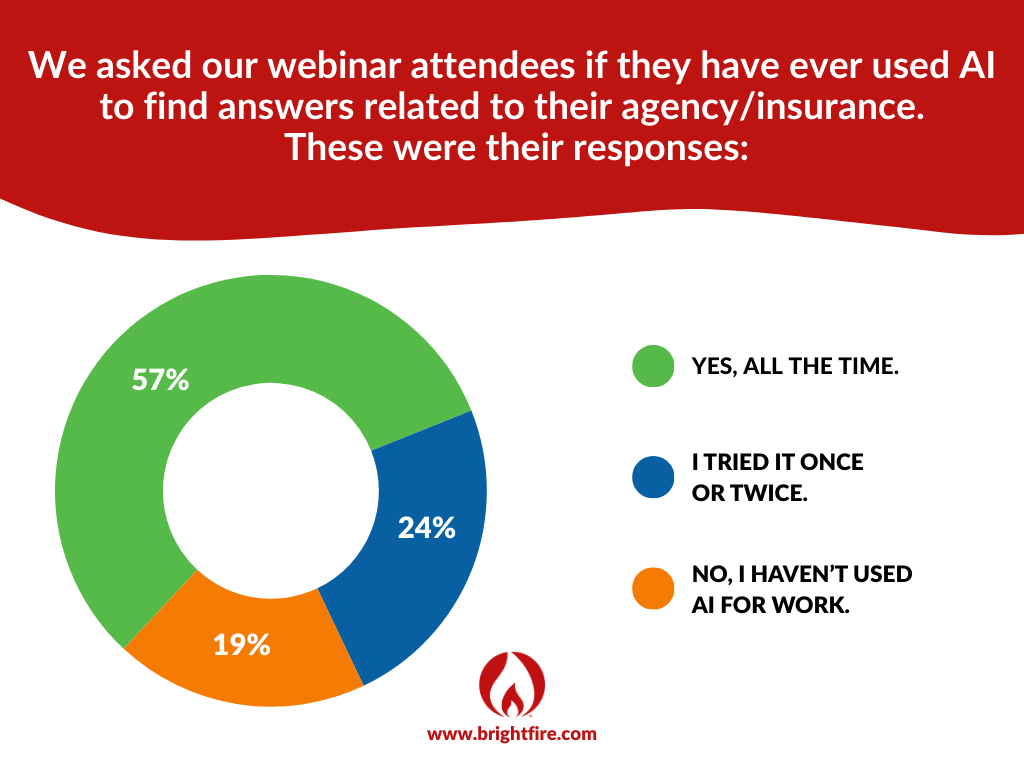
Lastly, we have a couple of polls for today’s webinar. When launched, you’ll see the poll pop up on your screen with the question and response options. Every poll is anonymous, and I’ll give you roughly 30 seconds to share your response. We’ll discuss the results with the group once the poll closes.
About BrightFire
I’d like to share a brief background about BrightFire for the attendees who are just getting to know us.
BrightFire is a full-service, digital marketing agency that focuses on the needs of insurance agents. We take a done-for-you approach to all of our services, taking the burden off of your agency. Our digital marketing experts set up and manage everything on your behalf to save you time, so you can focus on what you do best and grow your business.
Our services include:
- Custom Designed Agency Websites
- Search Engine and Answer Engine Optimization
- Local Listings Management
- Reviews & Reputation Management
- Search Engine Marketing
- Social Media Marketing
Currently, we work with over 2,500 agencies across the nation, and our first agency customer from 2000 is still a BrightFire customer today.
Now, let’s dive in!
The Digital Marketing Shift: Building on Foundational SEO to Advanced AEO
For years, digital marketing has revolved around the discipline of search engine optimization, aka SEO. This meant a heavy focus on content, keywords, and links in order to rank high on Search Engine Results Pages.
However, with the rise of AI platforms like ChatGPT and Gemini, and the increasing sophistication of voice assistants like Siri and Alexa, a fundamental shift in how users access information is underway. This is because AI platforms aim to provide answers to queries in a direct, natural, and conversational tone. To achieve this, AI relies on online content being structured and clearly delineated so it can be accurately identified, summarized, and cited by these platforms.
Enter Answer Engine Optimization.
Answer Engine Optimization, or AEO, focuses on understanding the user’s intent—the ultimate goal or motivation behind their search query—rather than just the keywords that were used.
AEO specifically targets three main categories of user intent:
- Informational, where the user is seeking a direct answer or knowledge.
- Navigational, where the user is trying to find a specific website or location (like your local office).
- Transactional, where the user is ready to take action, such as requesting a quote or purchasing a policy.
Now, this doesn’t mean that SEO is going away—far from it. Strong foundational SEO practices such as site speed, mobile optimization, quality content, and authority building are more essential than ever. These practices form the backbone that makes your content discoverable by traditional search engines and by the new wave of AI platforms.
Modern digital marketing requires a hybrid approach. If you want to get found, you need strong, traditional SEO foundations and structured content that can be easily understood and cited by AI models.
Introducing Answer Engine Optimization (AEO)
Let’s start by defining, “What is Answer Engine Optimization?”
Simply put, AEO is the practice of implementing technical organization and structure in your online content so that AI platforms or other large language models can easily understand, extract, and cite it.
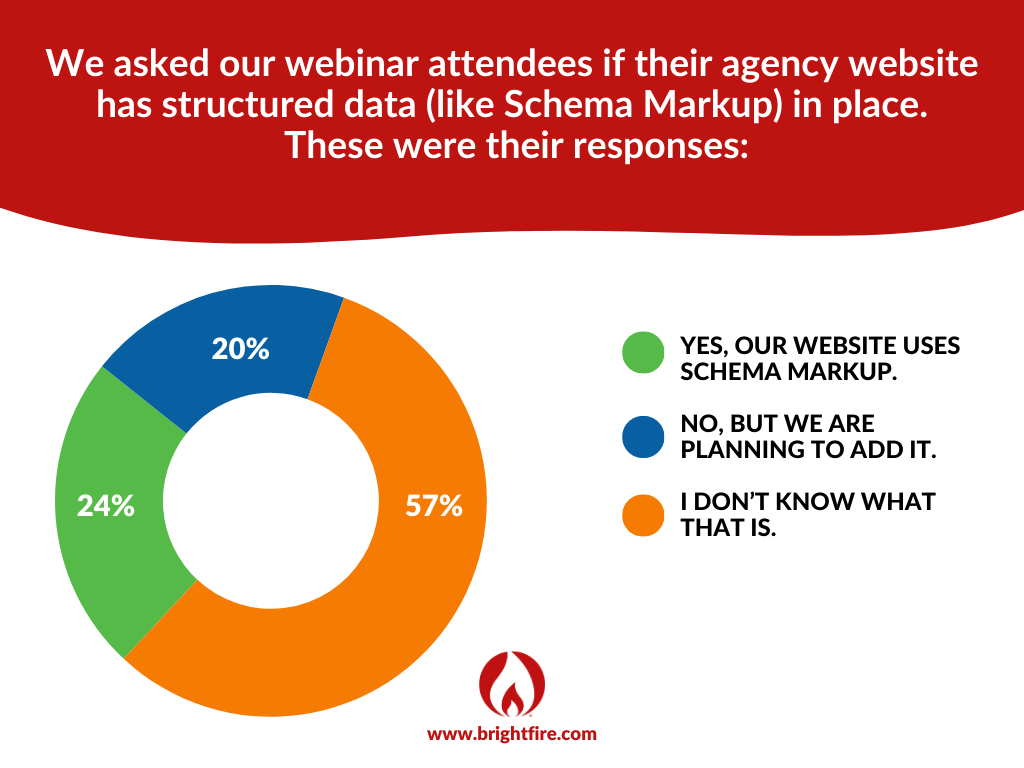
This technical organization and structure is achieved through disciplines such as schema markup and LLMs.txt, which are standardized to help search engines and AI better understand the context of your content.
For example, schema markup can provide context about a phone number shown on the screen, indicating it’s the official company phone number. This is especially useful on a staff directory page that lists each staff member’s direct phone number.
By incorporating these standards, you create a machine-readable summary that clearly labels data elements. This improves the discoverability of your content by AI platforms and increases the likelihood that it will be featured as a reliable source in AI-generated answers and search snippets.
The ultimate goal here is to shift your website’s role from just being listed highly in search results to becoming the trusted, definitive source for quick, accurate, and contextually relevant answers that these AI systems rely on.
AEO vs Traditional SEO
Now, how does this differ from the traditional SEO we’ve been practicing for years?
While traditional SEO focuses on maximizing your ranking to get your insurance agency on the coveted first page of search results, AEO focuses on immediate answers.
Traditional SEO targets broad keywords, whereas AEO aims to synthesize a comprehensive answer from relevant data sources.
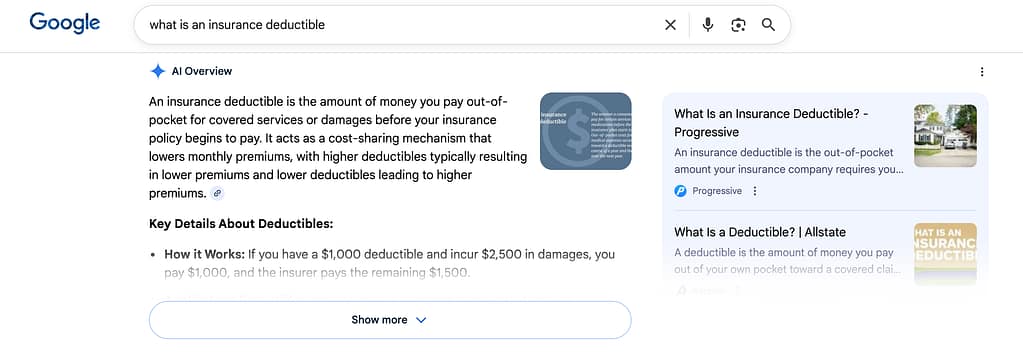
SEO aims to bring users to the answer with one click. AEO is successful when a user receives the exact answer they need directly in the AI’s response, with your website cited as the source, as shown in the image on the screen. This is referred to as a Zero-Click Experience. Although the user doesn’t necessarily click through to your page, your brand is still positioned as the expert.
AEO in Practice
Gone are the days when a click-through to your website was the only goal. Now that AI platforms are summarizing information for users, the goal includes having your brand or content cited, quoted, or even linked to in the AI’s direct answer or summary. This is called Citation-Based Authority and positions a business as a definitive source of truth.
And we see this in action with real-world examples you’ve probably encountered.
- Google’s AI Overviews: These are the most visible examples of AI synthesis, often pulling text directly from high-authority sources.
- Responses from voice assistants like Siri and Alexa: These are the ultimate “direct answer” machines, speaking a single, synthesized response to the user.
Content in “People Also Ask” sections: These are mini-snippets, usually a direct question and a concise answer, which feed directly into AI models and reinforce authoritative content.
Recommendations for Insurance Agencies
As I’ve stated on previous slides, if you want to be the source AI references, your website content needs to be technically structured so the AI can accurately synthesize it into a direct, conversational answer. This means optimizing your content for clear, concise, and direct extraction.
AEO focuses on structuring your content so it’s not just searchable by humans, but also digestible by the Large Language Models (LLMs) that power most of today’s AI search experiences. This means ensuring all your websites implement these LLM-friendly structures.
For your website, this means incorporating technical standards like Schema Markup and LLMs.txt. These provide explicit signals to AI crawlers, directing them to the precise answers and steps they need to extract. Incorporate detailed FAQ sections. Use clear heading tags, direct language, and place the most critical information at the beginning of the section.
Beyond the technical markup of your website, the substance of your content must cater to the AI’s need for definitive answers. Therefore, you’ll want to focus on hyper-local, long-tail queries and provide highly specific, location-based answers. When crafting your copy, adopt a structured approach by developing concise, one-to-three-sentence “answer chunks” directly beneath relevant headings.
Ensure all your video and audio assets are fully transcribed. Providing this comprehensive text foundation enables AI crawlers to fully index and understand all the information you’re offering, making your content an authoritative source for their generative summaries.
To fully maximize your efforts, you should also optimize your online business citations, or local listings. Begin with your Google Business Profile, focusing on the Q&A section. Use natural, conversational language that anticipates how users might phrase their questions. Continue proactively asking your clients to leave a Google review, and ensure your core business information is consistent and accurate across all online directories.
BrightFire’s Evolution in the AEO Landscape
In response to this shift, BrightFire is enhancing our website standards to further optimize for AI and facilitate content consumption by large language models (LLMs).
This includes:
- Implementing LLMs.txt across our website platform to better curate content for AI models.
- Incorporating FAQ sections to address the most frequently asked consumer questions for each type of insurance.
- Providing a clear, structured format to enable fast and efficient processing by AI.
- Increased usage of Schema.org markup to properly structure key data, such as FAQs.
A Custom-Designed Website
Now, if you already have a custom-designed website by BrightFire, then there’s nothing for you to do. Communications will be sent to customers who have our Insurance Agency Website service in the near future with more details.
However, if you don’t have an agency website with BrightFire, but you’re ready to improve your digital marketing efforts, consider scheduling a no-obligation consultation to see what’s possible.
We’re a team of digital marketing experts focused on staying up-to-date with the newest trends to ensure our suite of services remains valuable and relevant for you.
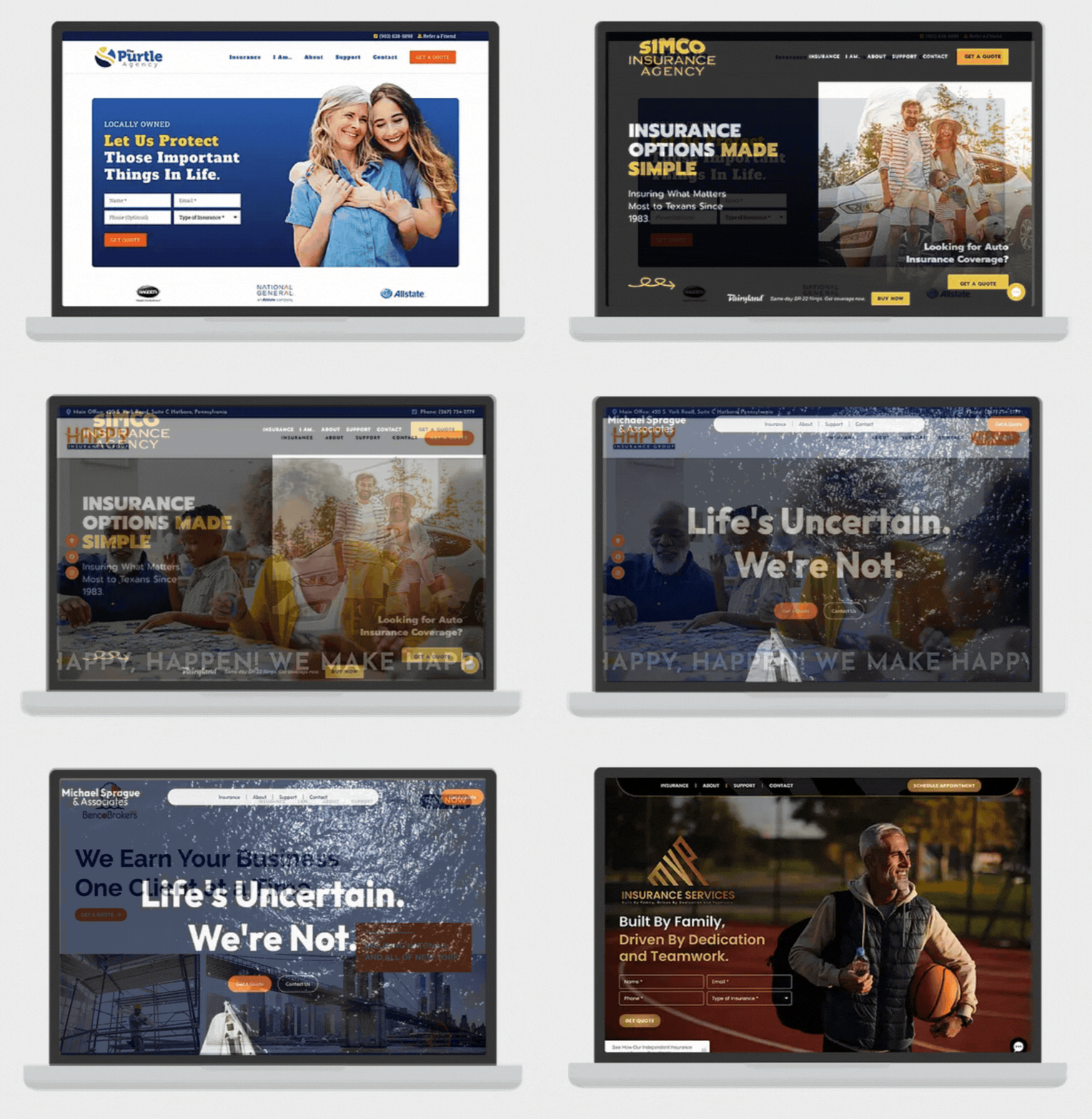
Our expert website developers and designers provide everything you need in an insurance agency website to attract and convert prospects, including:
- A Custom Design just for your agency
- Ready-To-Go Insurance Pages
- Comparative Raters Integrations
- Online Chat Widget
- Featured Reviews
- Weekly Blog Posts
- Lead Conversion Optimization
- Mobile Responsiveness
- Search Engine & Answer Engine Optimization
- Monthly Reporting
- Managed Security
You’ll also have the support of our knowledgeable service team, here to assist and answer any questions about your BrightFire website. Most requests we receive are completed on the same or next business day.
Your Overall SEO Strategy
Our support doesn’t stop there. In addition to building you a custom-designed website that’s optimized for SEO and AEO, we also support online business listings, review generation, and reputation management.
Our Local Listing Management service keeps your agency information consistent and accurate across more than 50 of the most important listings.
And, our Reviews & Reputation Management service helps your agency consistently generate new Google reviews, collect client feedback, and protect your online reputation.
Now, because we know that these practices are fundamental to an insurance agency’s local SEO goals and to maximizing the effectiveness of your website, we offer them in a money-saving package – our Ultimate SEO Bundle – which saves customers $40 per month off the standalone prices of our Insurance Agency Website, Reviews & Reputation Management, and Local Listing Management services.
How to Get Started with BrightFire
As a thank you for attending, we’re offering a $50 credit to webinar attendees who sign up for any of our services, including our Insurance Agency Website or the Ultimate SEO Bundle.
If you’re in need of an agency website, you can sign up for BrightFire’s Insurance Agency Website service for only $170 per month.
If you’re interested in taking advantage of BrightFire’s Ultimate SEO Bundle to cover all of your SEO bases and help your agency attract new insurance buyers, you can do so for just $290 per month. As a reminder, that includes our Insurance Agency Website, Reviews & Reputation Management, and Local Listings Management services, and saves you $40 per month off the standalone prices.
To get started and receive your $50 account credit, simply schedule a one-to-one, no-obligation consultation with a BrightFire Sales Advisor at brightfire.com/contact-sales and mention your webinar attendance. This promo ends next Wednesday, March 4th.
Our digital marketing services do not have any setup fees, contracts, or user fees, and we also include a 30-day money-back guarantee.
Onboarding typically consists of two 45-minute phone calls and about an hour of your own time to review your website draft. We’ll work with you until you’re totally happy with your new website.
Thank You & Questions
That concludes our presentation on Answer Engine Optimization: The Next Evolution of Consumer Search. Now we’ll head into our Q&A session!
Question: What kind of Schema.org does BrightFire already use?
Answer: Great question! We have Schema.org configured on every website that uses a schema specifically designed for insurance agencies. It’s a more specific version of the schema used for a general local business. This schema includes a ton of granular information, such as business name, address, phone number, etc. The same applies to each location for multi-location businesses. Reviews displayed on the websites we manage use the Reviews schema, which includes information such as the review platform, rating, date, reviewer’s name, review text, etc.
Question: Should I focus more on my website, generating reviews, or managing my business listings?
Answer: Thank you for this question. The short answer is all of it, as all of these channels feed into your local SEO and now your AEO efforts. First, you want to ensure your website follows current protocols, but it is equally important to have accurate and consistent business listings and to get new reviews on a consistent basis to help build authority, as we discussed earlier.
Question: How do I claim the $50 credit?
Answer: To claim your $50 account credit, simply go to www.brightfire.com/contact-sales and use the calendar to schedule a one-to-one, no-obligation consultation with a BrightFire Sales Advisor. During that conversation, just mention your webinar attendance.
Well, I think that is all the time we have for questions today. Thank you to everyone who submitted a question. From the rest of the BrightFire team and me, take care.